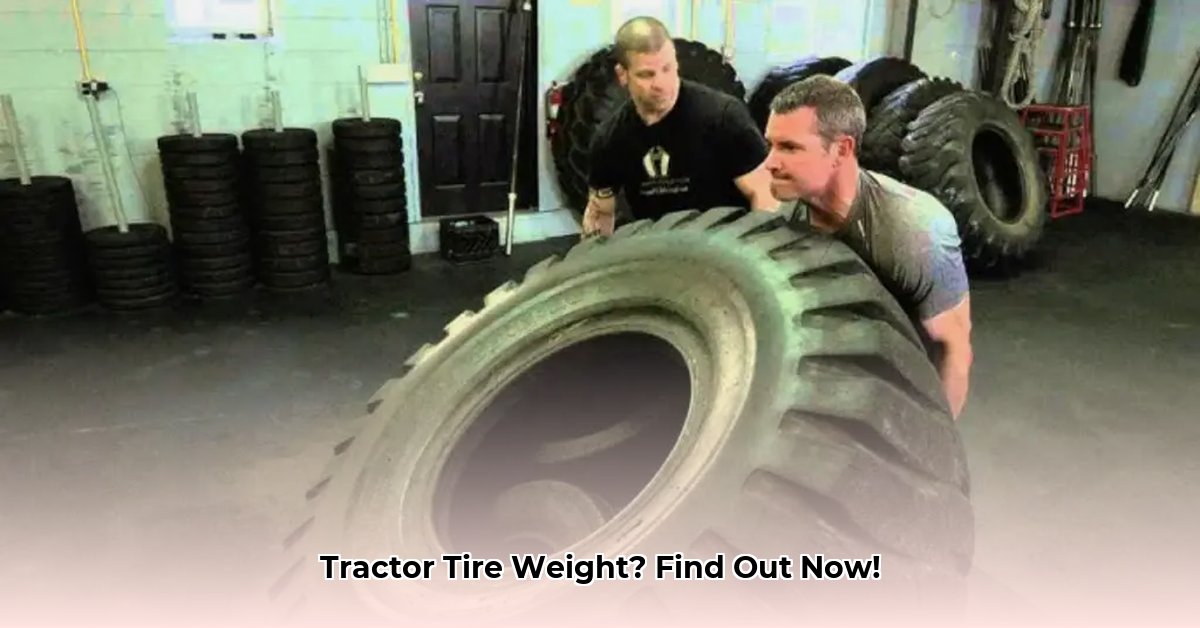
Knowing your tractor tire weight is crucial for optimal performance, safety, and soil health. This guide provides a step-by-step approach to finding the precise weight of your tires and explains the significant impact tire weight has on your farming operation. For additional resources on tire maintenance, check out this helpful guide on water filling.
How to Find Exact Tractor Tire Weight by Model Number
Accurately determining your tractor tire weight is essential for safe and efficient operation. This seemingly simple task can be surprisingly complex, as many factors influence the final weight. Here’s a comprehensive guide to help you find the exact weight.
Locating the Exact Weight: A Step-by-Step Guide
The most reliable method for determining tractor tire weight is by referring to manufacturer specifications. Follow these steps:
Identify your tire's model number: This alphanumeric code is usually imprinted on the tire sidewall (e.g., "16.9R24"). Note down every character accurately. This is your primary identifier.
Consult the manufacturer's website: Most major tire manufacturers provide detailed specifications online. Search their website for terms like "tire specifications," "technical data," or "product information." Use the model number you found in Step 1 to locate the specific tire's weight.
Check your tractor's owner's manual: Your tractor's manual may list recommended tire types and weights. This information is often provided based on your tractor's specifications.
Contact the manufacturer directly: If you can't find the weight online, contact the manufacturer's customer support. They are the definitive source for accurate weight information.
Account for Rim and Ballast Weight: Remember that the total weight will also include the rim and any added ballast (e.g., liquid or foam fill) within the tire. If you need the weight of the tire itself, you'll likely need to subtract these weights.
"Knowing the precise weight of your tires is critical for optimal performance and avoiding overloading," says Dr. Emily Carter, Agricultural Engineering Professor at Purdue University."
What Factors Influence Tractor Tire Weight?
Several key factors significantly impact a tractor tire's weight:
Tire Size: Larger tires, designed for heavier tractors and tasks, naturally weigh considerably more than smaller ones. This is a fundamental relationship.
Tire Construction (Radial vs. Bias-Ply): Radial tires are generally heavier than bias-ply tires of the same size due to their internal construction.
Manufacturer: Even with identical tire sizes and constructions, slight weight variations might exist between manufacturers due to their distinct designs and manufacturing processes.
Inflation Pressure: While inflation pressure itself doesn't directly add physical weight, maintaining the correct pressure is crucial. Underinflation can lead to increased wear and damage. Overinflation can cause structural issues.
What if Manufacturer Data Isn't Available?
Sometimes, the ideal manufacturer information may be unavailable or outdated. In such cases, proceed cautiously.
Use online resources with extreme caution: Several websites publish tire weight charts, but this information can be unreliable and out of date. Use these sources only as very rough estimations and never for critical decisions.
Estimate based on similar models: If you can't find data for your exact tire, look for information on similar models. Such information can serve as a rough approximation, but it's not a substitute for precise manufacturer data.
Consult agricultural equipment dealers: Local dealers often possess more comprehensive resources than the average consumer. They might be able to help you locate the information you need.
The Importance of Accurate Tire Weight: Beyond the Numbers
Knowing your tire weight is not merely a technical detail; it significantly impacts your farming operation in several key ways:
Traction and Stability: Properly weighted tires provide enhanced traction, especially in challenging conditions like mud or slopes. This directly translates into improved efficiency and safety.
Fuel Efficiency: Overly heavy tires increase fuel consumption by demanding more power from the tractor's engine. Optimal tire weight helps maximize your fuel efficiency.
Soil Compaction: Heavier tires can lead to increased soil compaction, potentially damaging soil structure and decreasing long-term soil health. Finding the right balance is critical.
"Overlooking tire weight can lead to both financial and environmental burdens," notes John Miller, owner of Miller Farms and a leading agricultural advocate.*
Sample Tire Weights (Estimates Only!)
This table provides approximate weight ranges. Actual weights can vary significantly by manufacturer and specific model. Always verify with the tire manufacturer's specifications.
| Tire Size | Tire Type | Approximate Weight Range (lbs) |
|---|---|---|
| 11.2R24 | Radial | 230 - 320 |
| 16.9R30 | Radial | 320 - 480 |
| 18.4R38 | Radial | 480 - 650 |
| 11L-15 | Bias Ply | 130 - 220 |
Remember: Accurate tire weight is paramount for operational efficiency, safety, and maintaining the long-term health of your soil. Always prioritize precise information directly from the manufacturer's specifications.